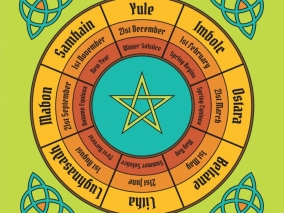

When people hear the word Mabon, many may immediately picture celebrations of the autumn equinox, which today falls on 23 September, when sun and shadow share the hours of the day equally. This day brings a unique balance between light and dark, which occurs only twice a year, with day and night each lasting about twelve hours. Although many associate Mabon mainly with celebrating wine and the apple harvest, it holds much more mystery and symbolism.
The Feast of Avalon reminds us of the magical island from the Arthurian legend, the Isle of Avalon, also known as the Isle of Apples, where King Arthur was carried after his death. It was here, on Avalon, that the sorceress Morgan le Fay and her eight sisters helped heal King Arthur and bring him back to life. It is a place linked with magic, healing and the renewal of life.
Norse mythology also mentions autumn equinox celebrations, called Gleichentag, which can be translated as “even day”. This festival honours Sif, the Norse goddess of grain, and celebrates the abundant harvest and food stores for the coming cold months. The Norse also remember the god Thor for protecting the harvest and crops.
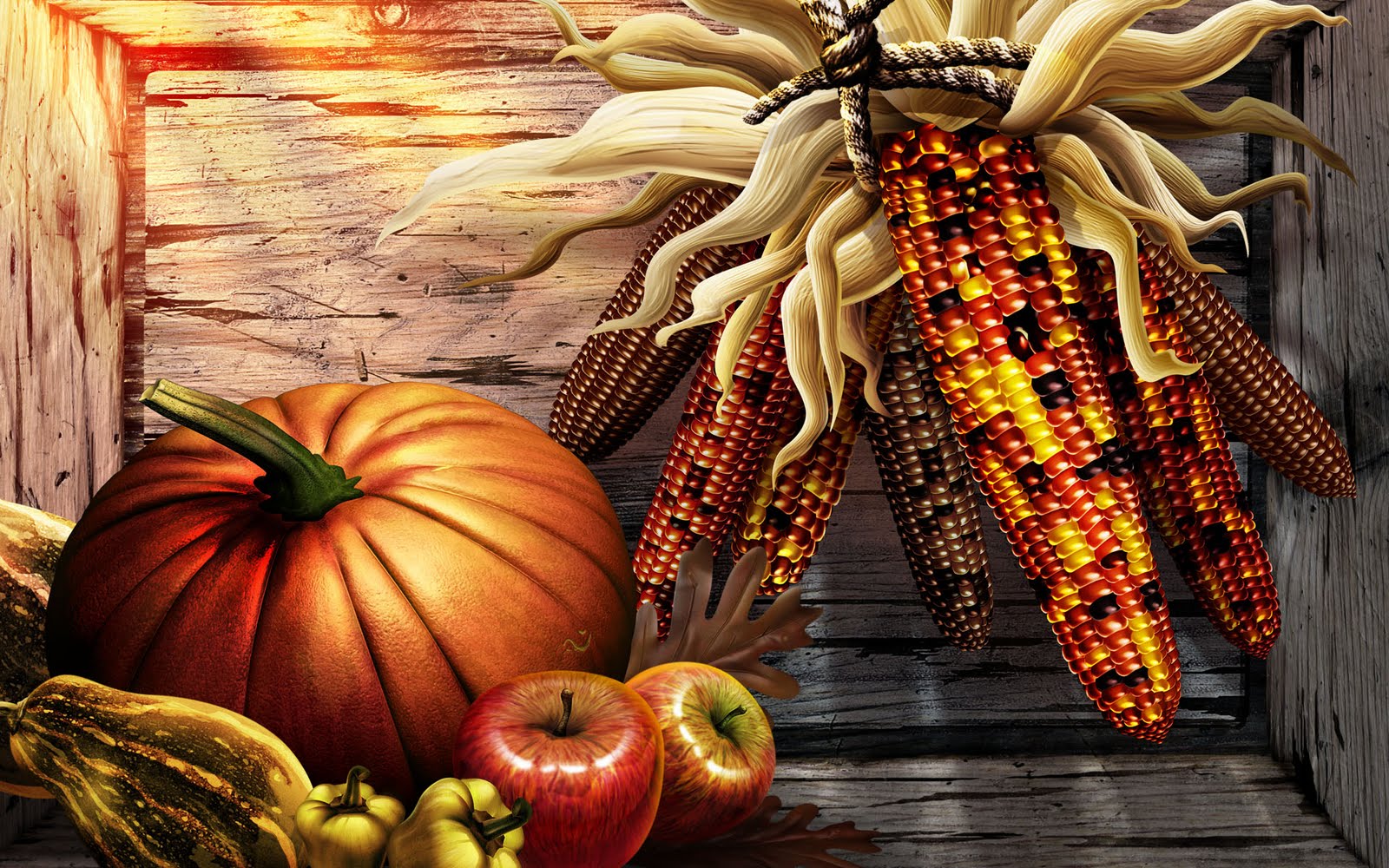
In the Slavic tradition, the autumn equinox is called Dożynki, which literally means “harvest”. Villagers always celebrated the harvest with giant wheat pancakes, believing that the bigger the pancake, the richer the next harvest would be. Wheat grains were also bound into wreaths and decorated with flowers, which became the centre of the celebrations. People kept these wreaths over the winter and brought them out in spring as a gift to Mother Earth, hoping for another abundant harvest.
All these facts lead us to the festival of the autumn equinox, even though the name “Mabon” has only been used in modern times. The name, derived from the Welsh god Mabon or Maponus, was proposed in the 1970s by Aidan Kelly, a popularizer of ancient pagan cultures.
And now, to help you celebrate this special time, here are a few tips:
1. Get baking:
Use this time for cooking and baking. Apple pie is an excellent choice, as apples are a symbol of life and immortality. Visit a cemetery and lay apples on the graves as a gift to the dead. In this way you show respect to those who are no longer with us. You can also try baking biscuits or bread. And if you are brave, try making a giant wheat pancake, as was done in Slavic equinox celebrations.
2. Make a tasty warm drink:
After all, what would a festival be without good food and drink? Sit by the window with hot apple cider or hot chocolate and watch the leaves slowly fall, marking the arrival of autumn.
3. Go for a walk in nature:
The autumn landscape is often beautifully coloured and looks as if an artist had made it. A walk in a colourful forest is the ideal way to connect with nature and gather ripe fruit such as sloes, rosehips or blackberries.
4. Do an autumn clean:
According to Celtic tradition, darkness comes with autumn, and the goddesses of darkness love cleanliness in our homes. Prepare your house for its winter sleep and welcome the goddesses with a clean and tidy home.
5. Light candles:
Candles are an important part of Mabon celebrations. Use them to honour the associated deity and as a symbol of the harvest. Choose candles with scents that evoke the autumn harvest, such as apple, cinnamon, chestnut or spices.
With these tips you can celebrate Mabon and the Feast of Avalon to the full and connect
with the ancient traditions and the nature linked to this season.