
The days begin to lengthen and nature slowly wakes up. At this time the Celts performed certain rituals, which the Christians later adopted. Lighting fires and candles, and fasting, helped them get through this difficult period.
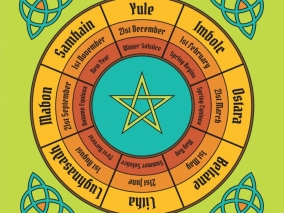
Imbolc celebrations begin with the last ray of sun on 31 January, when Yule ends. On the eve of the festival, little masked carollers go from house to house for their sweet reward. At their head they carry a plough decorated with white, silver and yellow ribbons. They carry straw dolls in little white dresses, symbolising the bride of the returning sun. In the forges the sacred fire is blessed, and in the fields pieces of food are left as an offering for the spirits to eat their fill. Candles and fires are lit in the houses. People meditate, dance and feast. Special cakes, bread and Celtic mead must not be missing from the table.
The first spring plants are important too – snowdrops, snowflakes, violets and others. Some have protective power, others healing power. White heather is very important at this time: it protects against dark forces and brings luck. You can put the flowers in a linen pouch and carry it with you at all times.
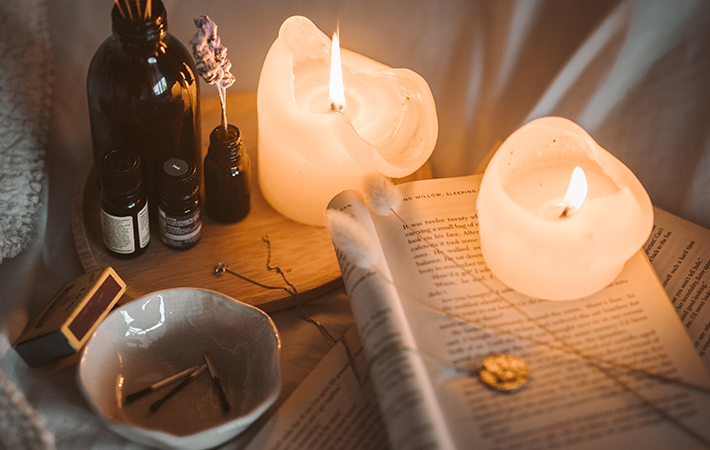
A festival of lights and fire cannot do without candles
Today we know this festival mostly in its Christian form as Candlemas. As you surely know, Christian culture took over many of its traditions from pagan festivals, and this one is no exception. All winter long, women make candles dedicated to the pagan goddess and patron of the druids, Brigid. The candles are placed in the windows together with fresh bread, and then protect the house all year from storms, thunder and lightning. Candles are always lit in odd numbers – three, five or seven. Seven candles symbolise the seven stars of the zodiac, but also the seven fiery centres (chakras) of the human body. White candles are lit; witches light brown candles blessed with holy water.
Candles also represent the light of the Sun and of the spirit, as well as positive cosmic energy. Even today many of us like to gaze into the light of a burning candle. The magical light of a candle can calm us, relax us and help us concentrate, so that we can meditate better and connect with the energy of the universe. Try lighting a candle and simply watching its little flame for a while. You will see that much changes in a short time.
Brigid – goddess, patron of the druids and virgin bride of the returning Sun
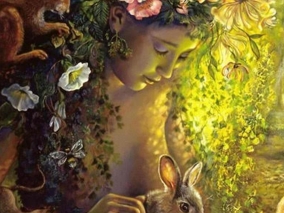
The name of the Irish and Celtic goddess means “exalted one”. Brigid, the youngest goddess of the modern Celtic wheel of the year, is honoured as the virgin bride awaiting her husband – the Sun. She is the patron of healing, divination, smithing and the arts. She gives magical power to all springs, wells and other water mysteries. She helps women in pregnancy and childbirth. Perhaps that is why her plant is the delicate spring flower coltsfoot, which shyly basks in the first rays of the sun and, like Brigid, is full of healing power.
In her honour, women perform various rituals in spring to celebrate fertility and awakening nature. At this time you can ask her to guide you on the path to healing. In summer, women weave straw crosses to protect all beings and homes. In winter the crosses protect the harvest, the buildings and the cattle sheds.
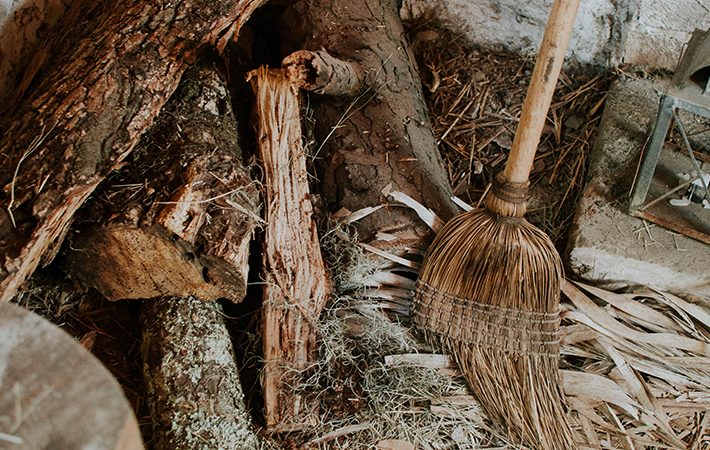
Cleansing not only the home, but the soul too
Essentially this means a thorough clean of the home. People tidy up, sort out old things and open the windows so everything old can fly out. This cleansing ritual is accompanied by cleansing with fire: small or large fires are lit in front of the houses, and candles inside bring the needed light into the rooms. Besides cleansing the home, pagans also take care to cleanse the soul, with many rituals such as bathing in icy water, which today we practise as healthy cold-water swimming. But you can also choose less “drastic” methods, such as a herbal bath that will put you in a pleasant mood.
A 6-week fast – a time for reflection and reconciliation
Fasting taught our ancestors not only reflection but overall restraint. It was certainly also linked to the dwindling food supplies they faced at this time. Simple meals were eaten, such as dishes of sprouted peas or wheat prepared in various ways. Some Lenten Sundays were even named after these foods. Another Lenten Sunday, the “sneezing Sunday”, is linked to the plague of those times. On “black Sunday” women wore black dresses or headscarves.
Driving out death and welcoming new life
For our ancestors to welcome new life, the village had to be rid of death – symbolically, of course. This was done with the so-called Morana, Mařena or Smrtholka, a figure made of natural but dead materials: dry branches and threshed straw. The figure is dressed in an old white or black dress and decorated with empty snail shells and nutshells, which symbolise death and decay. Carrying this figure out of the village means carrying out not only death, but disease too.
At Imbolc we meet the principles of life once again. By observing nature we find that what happens in nature most likely happens within us as well. Keep this in mind and perhaps try one of the simple rituals you have read about today. Done properly, they will help improve your days, your mood and your view of the world. There is nothing like stepping into the new year with a clear head and full of hope.